Juicing Service.
Juice from your apples
Press | Pasteurise | Bottle
We have the equipment to make delicious juice from your fruit.
You bring us clean fruit free of mud, rot and mould.
We check and wash the apples
We put them through our scratter and press them in our hydropress.
We then pasteurise your juice for you to collect and enjoy.
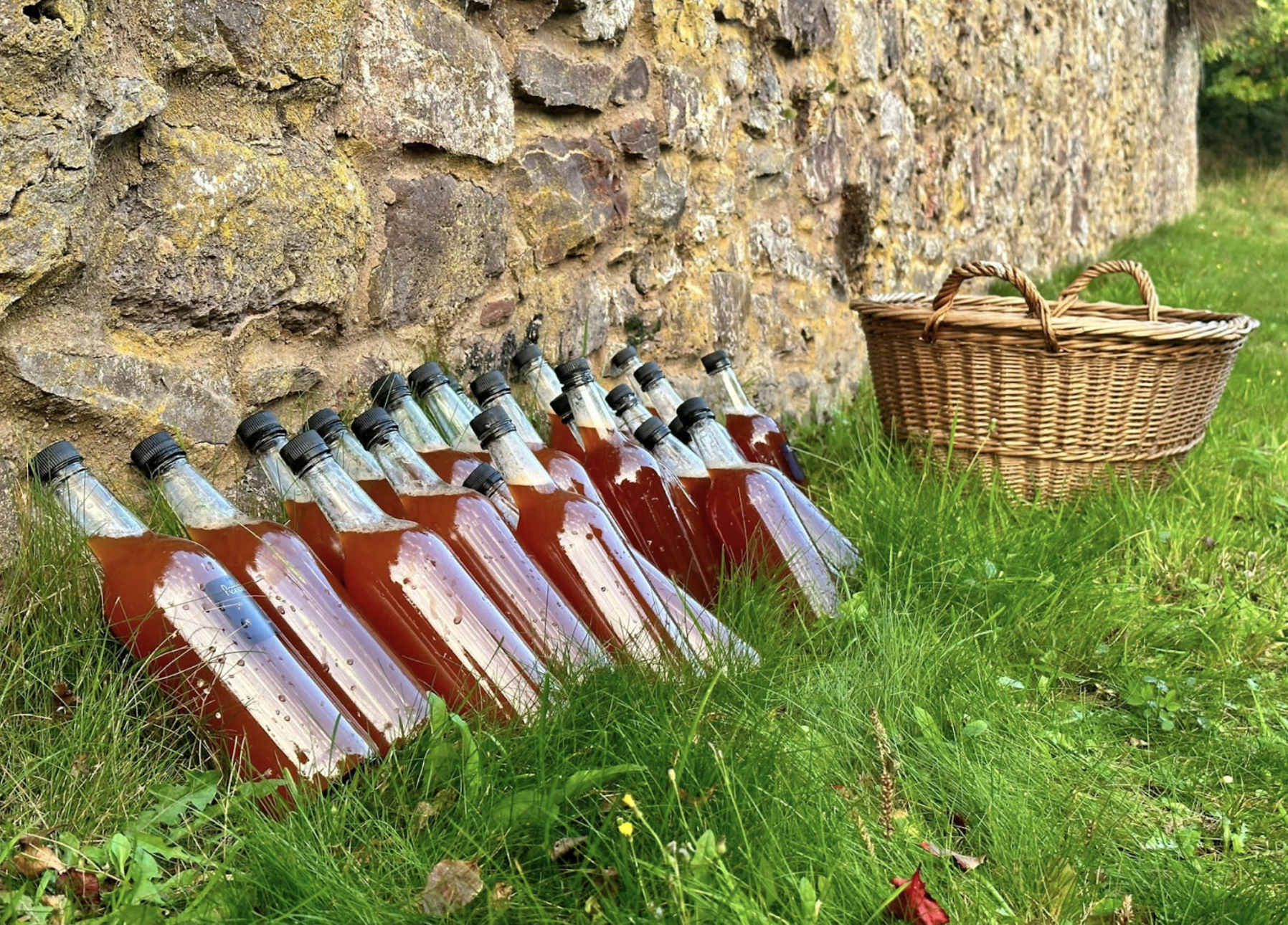
Fresh Juice - Without the Fuss
How it works
-
Estimate how many apples you are likely to bring.
As a guide:
1 recycling box full equals 20Kg
1.5 kg of apples produces approximately 1× 750ml bottle of juice.
Pick your apples when they are fully ripe. To test for ripeness, gently lift an apple and give it a slight twist. If it comes away easily, it’s ready to harvest.
You can also bring windfalls as long as you have checked they are not too damaged.
Please do not bring apples with bird pecks, large bruises, or any signs of rot or mould.
Suitable containers:
baskets
boxes
trays
sturdy containers with strong handles.
Avoid:
black bin bags
hippo/dumpy bags (they’re too heavy to lift safely).
-
Once you’ve estimated your apple quantities you are ready to book.
80-150 kg 3-4 hours
151kg - 260kg 4-6 hours
300kg - 500kg 6-8 hours
Let us know:
Approximate quantity of apples
How you intend to deliver them
We will take a booking fee at this point to secure your slot
-
Please arrive on time for your slot.
You’ll be asked to unload your fruit into the unloading area.
We’ll take your details, label your apples, and get ready to press them.
-
Your juice will be pasteurised and bottled into 750ml glass bottles, allowing it to keep for up to 1 year.
Bottles are then packed into your strong cardboard boxes.
We’ll contact you once your juice is ready.
Please collect promptly, as we need the storage space to process other batches.
Register Your Interest For Juicing in 2026
If you are interested in bringing your apples to us in 2026 to have them pressed into delicious juice, please fill out the form below and let us know how we can help you.
FAQs
-
We are working on pricing but is estimated to be in the region of £1.75 - £2.30 per 750ml bottle. Includes, scratting, pressing, pasteurising, bottle and cap.
If you require cardboard boxes and dividers to transport and store your bottles a box that will store 12 bottles is £1.50 each
-
Minimum quantity for pressing is 100kg
-
Both eating apples and cooking apples make excellent juice. Cider apples don’t tend to make good juice on their own, but mixing some in with the will enhance the flavour. We do this ourselves and make delicious, well balanced juices.
-
Colour – Many apple varieties develop a red or golden blush as they ripen.
Falling Fruit – Apples beginning to fall from the tree can be a sign of ripeness, though not always. If they’re dropping too early, pick them and allow them to ripen off the tree.
Taste Test – Try one! Ripe apples taste sweet because most of their starch has converted to sugar. If it still tastes starchy or bland, it needs more time. For a more precise check, you can use an iodine test to detect starch levels.
Pips (Seeds) – Cut an apple open and look at the pips. If they’re still white, the apple isn’t ripe yet. When the pips turn brown, it’s a good sign the fruit is ready to pick.
Starch Levels – As a general rule, apples are ripe when most of the starch has turned into sugar. You can confirm this by taste or with an iodine test if you want to be sure.
-
The general rule for juice is that apples should look good enough to eat.
Small or large apples are fine and apples with scab on the skin are fine.
Do not include bruised or mouldy apples as this will impair the flavour, as will muddy apples.
-
We don’t offer labelling yet but will in the future.
-
We feed the waste apple pomace to our cattle and sheep. They absolutely love it.